A Response to Professor Glaude's:"The Black Church is Dead"
[http://faithinthebay.com/wp-content/uploads/2010/03/dquick.jpg]This is my response to the article by Professor Glaude (See http://www.huffingtonpost.com/eddie-glaude-jr-phd/the-black-church-is-dead_b_473815.html [http://www.huffingtonpost.com/eddie-glaude-jr-phd/the-black-church-is-dead_b_473815.ht
This is my response to the article by Professor Glaude (See http://www.huffingtonpost.com/eddie-glaude-jr-phd/the-black-church-is-dead_b_473815.html) :
Not since Joseph Washington, Jr.’s 1964 text, Black Religion: The Negro and Christianity in the United States, have I encountered such a misreading of the Black religious experience. There are five critical points in this conversation as I understand it: First, as a scholar I would assume that Professor Glaude took account of three basics factors when he wrote his article: 1) In what publication will it appear? 2) Who is my target audience(s)? 3) What are the essential points that I am attempting to communicate? As such, who is Glaude reaching via The Huffington Post? Who is his target audience and how would they understand his points? Many well meaning white liberals have not the intellectual background to dissect Professor Glaude’s article with historical and sociological precision. Hence, the very title sends a message that is dangerous! We must be careful about how those outside of the Black experience hear and read about a culture that is a fetish for them in the first place (just ask Dr. Jeremiah Wright). Is this a serious effort for a dialogue with the community at issue or a dance to advance the profile of another elite cultural critic? Indeed, I am curious about the telos of the article. Was its aim to advance a dialogue in love with the community at issue or was its telos simply to provide fame for The Huffington Post’s new religion section. I pray it was the former, for the latter world be just another abuse of the Black church for the advancement of corporate interests.
Second, where does he get the data to back up this claim: “But the idea of this venerable institution as central to black life and as a repository for the social and moral conscience of the nation has all but disappeared.” Did it come from years of in-depth investigation? Did he take a survey? Did he visit anyone of our churches? As a scholar there should be some data to back up his claim. Maybe it is his experience in the Black church. Has the church of his childhood or his current congregation stopped its efforts to feed the poor or visit the imprisoned or sick? If not from his personal experience, does he know how many people Black churches around the country feed on a daily basis? How many lights are cut back on by church funds? How many probation letters we write? How many city council or school board meetings Black pastors attend in advocacy? Advocacy is often most effective in its local manifestations.
Third, Glaude writes: “Or, we are invited to a Financial Empowerment Conference, Megafest, or some such gathering. Rare are those occasions when black churches mobilize in public and together to call attention to the pressing issues of our day. We see organization and protests against same-sex marriage and abortion; even billboards in Atlanta to make the anti-abortion case. But where are the press conferences and impassioned efforts around black children living in poverty, and commercials and organizing around jobs and healthcare reform? Bishop Charles E. Blake Sr., the presiding bishop of the Church of God in Christ, appears to be a lonely voice in the wilderness when he announced COGIC's support of healthcare reform with the public option.” This statement is so silly I don’t know where to begin!
First, Jakes (Megafest) does not accept the label of a Black church. Second, Jakes does not represent the average Black congregation! Basic statistical research on the membership and financial profile of the average Black church would have informed Glaude of such. Surely a scholar of his brilliance would have known this before printing such. Third, he lifted up Bishop Blake as a shining example of the path that the church should take. Yet, he does not recognize that the “Grand Ole Church” and its leaders are not ordaining women and preaches against “homosexuality” (while the gay musician plays the Hammond in the background). As such, as a scholar his article fails to acknowledge the differences many churches of color make between “social issues” and issues of “personal morality”. It is not as simple as a black and white judgment. For every Jones and Ike, I could point to a Francis James Grimké, Henry Highland Garnett, etc. This is not to say that Glaude is totally wrong. I acknowledge that he has some bits of chocolate mixed in with his manure. Again, my concern is audience. Last, I would go back to his use of pronouns. Who is the “we” he is referring to? Is he including himself in the Black church tradition, and if so, in what capacity?
Fourth, Glaude misses the local because of his view of the celebrity. There have been marches planned by ministers of color who are protesting the proposed layoffs of S.F. school teachers. There were protests and rallies last year in Oakland over the killings of black youth. There have been countless conversations with city officials around issues of funding and education. There was the march to the Federal Reserve by Black church ministers led by Rev. Jesse Jackson and Dr. Amos Brown against the foreclosure crisis. These are just a few examples in one area. Glaude would not know this because of his view from Princeton. If you are not invited to Tavis’ panel you are clearly not important. Glaude misses that the media chooses what stories to make sexy.
It must also be kept in mind that it is a political act to feed the hungry and advocate for the sick in one’s congregation in the midst of poor urban medical options! I am saddened that the very people attempting to feed the masses, bury the dead and fight for the oppressed on a daily basis are never asked to speak to their own reality. Instead, we are pushed to the background for celebrity scholarship with no daily interaction with the existential realities of poverty, abuse and structural injustice.
Last, I would urge my colleagues to make a distinction between the modern manifestation of Black cultural criticism of the church (much of which exhibits a clear negative bias) and theology. Theology is the church’s self-critique as to its success or failure in living the mandate of God to be a prophetic witness. One is to engage in the act with fidelity to its guiding principles of love, justice and community. I believe that the post-modern academy has dispensed with the notion of “objective scholarship”. Professor Glaude’s analysis lacked any phenomenological integrity. We are still at a point in this nation where race and capital are still the twins of the American ethos. I think this would be a horrible time to be reductionist about the institutions that in their imperfection, fought for people like Professor Glaude to occupy his Chair at Princeton. I say this with deep love and respect for a scholar of great note.
==
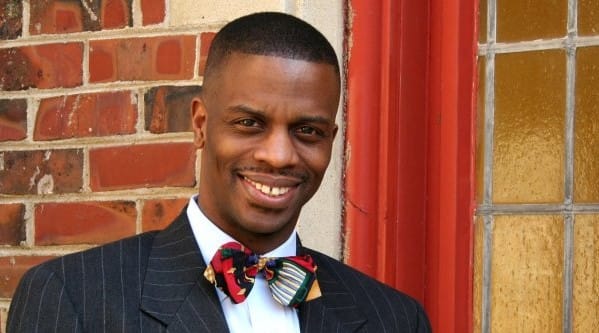
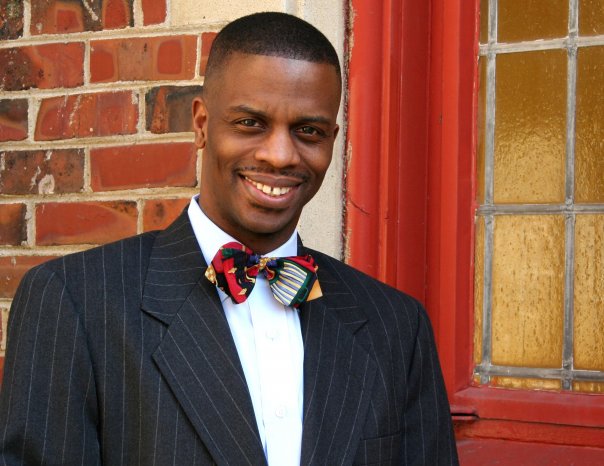
Rev. Dante Quick is currently pursuing a Ph.D. in Philosophical and Systematic Theology at the Graduate Theological Union (GTU), with a focus on African-American Studies at the University of Cal., Berkeley. His studies are focused on the theology of Howard Thurman and the political philosophy of Ralph Bunche en route to an African-American political theology. He is the first Howard Washington Thurman Teaching Fellow at the American Baptist Seminary of the West.
Click here to visit "QUICK" THOUGHTS, Rev. Dante Quick's Blog